Week 8: Social Work Role Across the Lifespan
If you look at the shelves of any drugstore, you will find products to combat the effects of aging—from vitamin supplements to hair growth serum to wrinkle cream. Such products are just one sign of the way in which our society privileges youth, but aging is a natural process that cannot truly be prevented—no matter how many lotions you use.
Social workers must understand perspectives and experiences at different life stages. This includes older adulthood, where social workers should consider the following questions: What is it like to grow older in this era of anti-aging? How might an older person view life—its challenges and strengths—at their age?
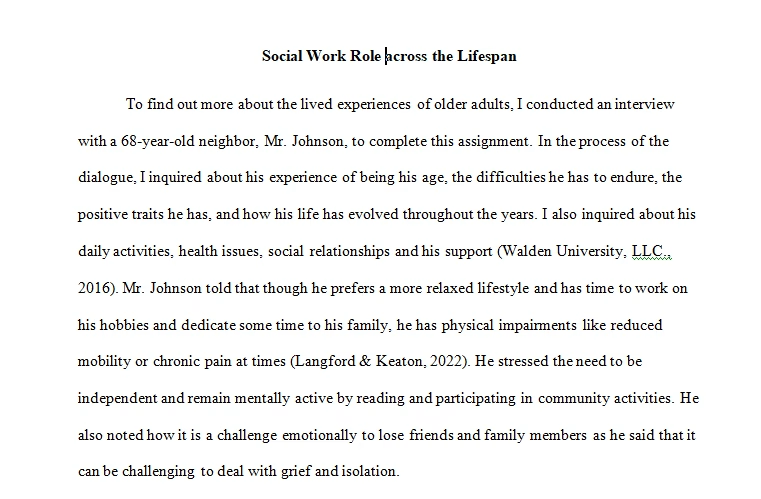
For this Assignment, you interview an older adult and reflect on what you learned.
To prepare:
- Review the Learning Resources on social work with older adults.
- Arrange a conversation with someone 65 years old or older. This could be a relative, a neighbor, a friend, or a professional colleague who fits the criterion. Consider the following ideas:
- What it is like to be their age
- What challenges they might experience
- What strengths they might possess
- Develop a list of specific questions you might ask to uncover these broader ideas for the Assignment. After talking with the individual, reflect on the experience.
Submit a 2- to 3-page paper in which you do the following:
- Briefly describe what you learned in the interview.
- Reflect on any beliefs, biases, and/or stereotypes you held and how they were supported or contradicted.
- Explain how diverse identity characteristics such as race/ethnicity, religion, gender, socioeconomic status, and/or ability might affect the experience of a person of a similar age.
- Describe a social worker’s role when working with older adults.
Apply concepts and material from this week’s Learning Resources to inform your paper. A standard academic paper is written in 12-point font and double-spaced.
Tutorial for Social Work Role Across the Lifespan