
Week 10: Social Workers as Agents of Change
Think of someone you identify as being an agent of change or a social justice leader. What kind of qualities, characteristics, or traits do they possess? What skills do they use to help them enact change? You might come up with perseverance, passion, leadership, communication, knowledge, empathy, integrity. All of these—and more— are necessary. But perhaps the true starting place for change is observation—in other words, noticing that a problem or gap exists and acknowledging that there is a responsibility to address it.
For this Discussion, you practice this skill of noticing. First, you examine your own community for crime-related problems and the criminal justice system’s response. You then consider how a social worker might guide transformation in this area.
To prepare:
- Review the Learning Resources on criminal justice and social workers as change agents.
- Consider crime-related social problems that you see around you—in your community or in the media—and that interest you. Select one on which to present.
- For this Discussion, you may choose to write your response, record a video, use PowerPoint, or create an infographic in order to present the information and ideas to your colleagues.
Using your chosen presentation method:
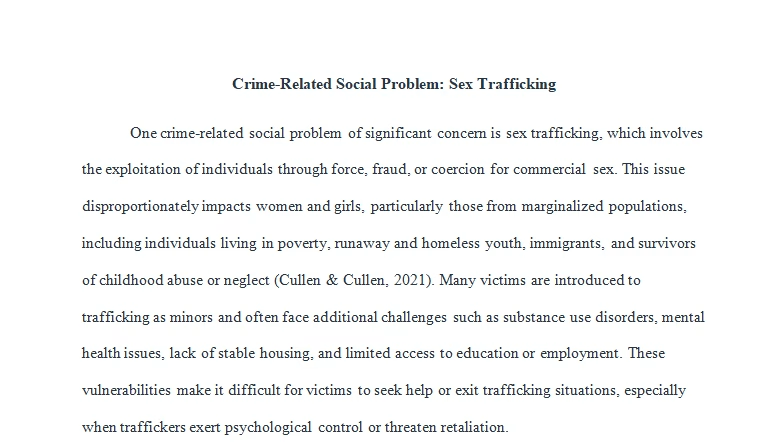
- Identify a crime-related social problem of interest to you (e.g., neighborhood crime, violence against women, sex trafficking, financial exploitation of older adults, hate crime). Describe the population impacted by this problem.
- Describe one response that the criminal justice system has had to this problem in your community.
- Finally, explain what social workers can do to advocate on this issue and for the population impacted
Tutorial for Social Workers as Agents of Change
 5
5