Week 1: Discovering Diasporas
There are two types of diasporas: forced and voluntary. “Forced” diasporas are the result of traumatic events like war, conquest, enslavement, and natural disasters. “Voluntary” diaspora movements are the result of people looking for better economic situations in countries or states/jurisdictions other than their home.
One example of diaspora is “The Great Migration” of African Americans from the Deep South up the Mississippi Valley. From the early 1900s through the 1970s, approximately 6 million Black people migrated northward, looking for a different quality of life, employment, and housing. As people migrate, they bring their culture with them, including music, dance, theater, visual arts, food, religious beliefs, and traditions. The Great Migration is just one of several diasporas. Historians speak of the Irish diaspora, Jewish diaspora, Armenian diaspora, etc.
While diaspora refers to a spreading out of people and their culture, accretion is the accumulation and settling of people and their culture. As new people settle in a place and its surrounding areas, their traditions and cultures adapt and form culturally rich and diverse centers—much like layers of rock and dirt in Earth’s crust accumulate over time.
Post at least a 2- to 3-paragraph response to the following prompts:
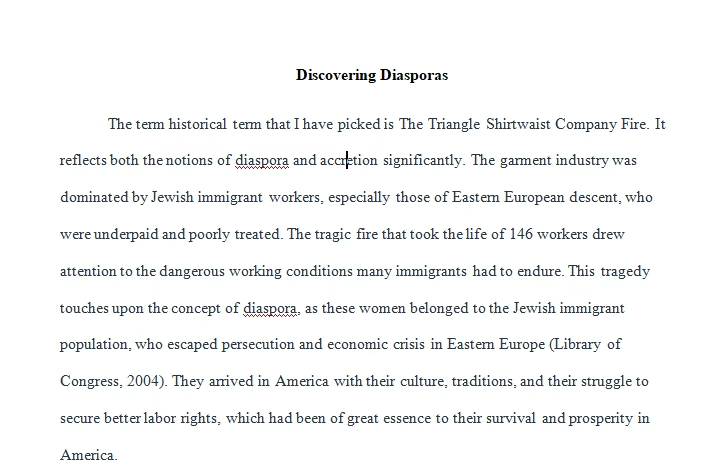
- Select one historical item from the “From Haven to Home” resource. Describe it.
- How does this item represent the concepts of diaspora and accretion?
- Support your response with information from this week’s Resources.
Tutorial for Discovering Diasporas