WEEK 2 Discussion 1: Models/Theories of Organizational Culture
Prior to beginning work on this discussion forum, read the articles by Kulovic (2022) and Irimiaș (2022). Review the webpages Edgar Schein’s Anxiety & Assumptions: Powerful Ideas On CultureLinks to an external site. and Organizational Culture Models – Everything You Need to KnowLinks to an external site. Analyze a model or theory of organizational culture as described in the required readings this week. Based on these readings, your own research, and in the context of an organization that you were or are associated with, create a PowerPointLinks to an external site. training presentation of at least eight slides (not including the title and reference list slides) about the model or theory, including at least 50 words of speaker notes for each slide, and citing at least two scholarly sourcesLinks to an external site.. The target audience for the training presentation is a group of managers who are learning about the impact of organizational culture.
In the PowerPoint presentation,
- Explain the model or theory and its key components.
- Justify why you believe this model or theory represents the organization.
- Share two actionable items that can help implement the analyzed model or theory.
The infographic lists key features of three models of organizational culture.
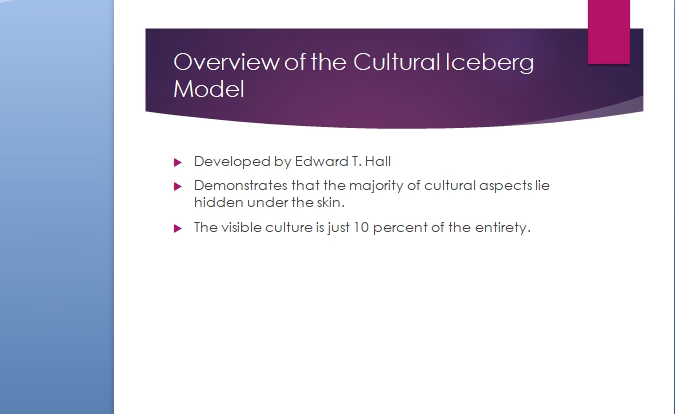
In the Cultural Iceberg Model:
- Visible aspects include vision, mission, and policies.
- Invisible aspects include values, attitudes, norms, and relationships.
- Change happens when leaders recognize invisible aspects of culture.
In the McKinsey 7S Framework:
- Focus is on the organization as a whole system.
- Hard elements include strategy, structure, and systems.
- Soft elements include corporate culture, staff, skills, and shared values.
- Leaders must be able to balance all elements to be successful.
In the Hofstede’s Model:
- Culture develops as different people with their own identities and experience come together.
- Layers of culture include values, rituals, heroes, and symbols.
- Culture leaders can use this model to conceptualize an ideal organizational culture.
Tutorial for Models/Theories of Organizational Culture