
A research paper can be defined as an academic document which contains deep, independent research with the objective of offering interpretation, analysis, and argument. Differently from academic essays, research papers turn out to be lengthier, and more comprehensive, as they aim to evaluate students’ writing, as well as scholarly research capabilities. While writing a research paper, one is expected to showcase expertise in the subject area, critically review a range of scholarly sources, and introduce a distinct perspective to the discussion. Research papers are considered to be fundamental elements of modern science and a highly effective mode of knowledge dissemination throughout a wide network. Therefore, writing a vibrant research paper is crucial without putting into consideration whether one is submitting the research for academic grading or publishing in a journal. In this guide, we provide key research paper writing tips that include research top selection guidelines, structuring a research paper, as well as adherence to the recommended research ethics.

Research topic selection is typically the most vital step in research writing as it determines everything which follows and the overall outlook of the paper. In most cases, research assignments are open-ended, thus learners are expected to choose their topic of interest within their subject area. Even though it may tend to be a simple task, making the wrong topic choice can make the entire research paper writing process a daunting task. In that respect, the top priority should be to identify a research paper topic that will allow one to gather sufficient content for the entire research paper. Therefore, one should choose a topic that not only has enough data, but also relatively complex to enable a comprehensive discussion.

Nonetheless, it is good to steer clear of general topics and opt for adequately specific topics, which will allow one to cover most of the relevant information without having to cut too much. Besides, the selected topic has to address existing research gaps or make a significant contribution to the ongoing debates in a particular subject area. Most importantly, it is necessary to obtain feedback from peers or instructors for purposes of refining your ideas. It should be noted that constructive feedback greatly assists in aligning the selected research topic with academic standards.
The next critical step after selecting a compelling research topic is structuring the research paper in accordance to the set standards. Either way, a well-structured research paper enhances readability, in addition to ensuring that the featured arguments are presented in a logical manner. A great research paper is expected to start with a title and abstract. As earlier stated, the title should be relevant, concise and descriptive. Additionally, the research topic has to convey the major essence of the research. The abstract comes after the title page and it provides a summarized view of the research objectives, methodology, key findings, as well as conclusions. The recommended length of the abstract is having about one hundred and fifty to two hundred words. The abstract section is followed by the introduction, whereby the context of the topic is introduced and the research questions clearly stated. In addition, the introduction should feature the research objectives together with the significance of the research study.

Upon completing the introduction part, one proceeds to the literature review section within which a summary of the studies relevant to the research topic is provided and gaps in the literature highlighted. It is in this section that one is required to showcase his or her understanding of the field, in addition to justifying the need of conducting the research. The literature review is followed by the methodology section. The methodology features the methods utilized in data collection, and analysis along with other details such as research tools, design, and techniques. Under this section, one should avoid reproducibility by being transparent and specific.
Next after the methodology come the results and discussion sections in a successive order. In the results section, the research findings are featured through the use of charts, graphs or tables where appropriated. Avoid undertaking results interpretation under this section, and focus only on presenting the data. On the other hand, the discussion segment features an analysis and the interpretation of the results within the context of the outlined research question. Moreover, a comparison should be made between the findings made with the ones of the past studies and state any limitations. Besides, make suggestions on future research directions under this section.
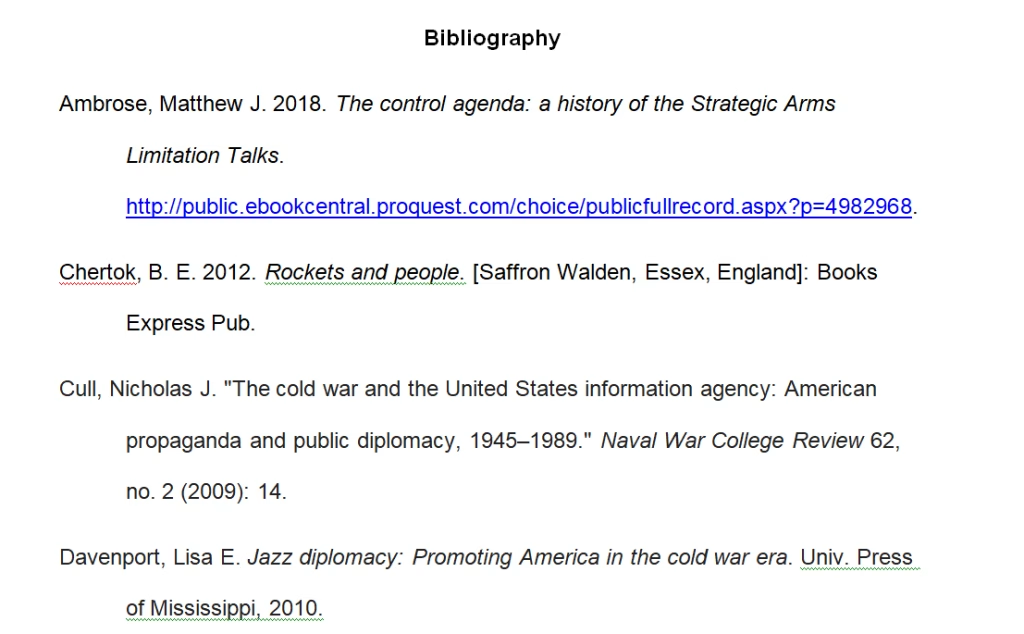
Lastly, provide a conclusion that ties the research to the thesis, tying together all the major ideas featured in the preceding sections. Most importantly, do not forget to add a reference page whereby all sources cited in the research paper are outlined alphabetically in accordance to the specified referencing style. Proper referencing is critical for credibility and avoidance of being accused of plagiarism. If the need arises, an appendix is also added to the research paper within which supplementary materials such as questionnaires or raw data are presented.
Above all, while writing a research paper, it is essential to adhere to the set ethical standards. Ethical violations can make the credibility of the research work questionable in addition to damaging your reputation. In that regard, one should avoid issues such as plagiarism by ensuring that all the presented information is paraphrased and properly cited. Besides, there are a range of plagiarism detection tools that one can use to scan his or her research paper and make the necessary adjustments. Moreover, in the event the research involves the use of human subjects, their consent should be obtained and they should also be sensitized about their rights. On top of that, the privacy and confidentiality of the participants should be protected. In some other cases, it may be necessary to disclose personal or financial interests which could influence the research to avoid conflict of interests.
Overall, research paper writing happens to be a multifaceted procedure, which needs careful planning, observing the applicable ethical standards, and paying attention to detail. By learning the art of selecting a research topic, coming up with a logical structure, and sticking to research ethics, one can successfully produce a research paper that satisfies the required academic standards and makes significant contribution to one’s field of study.